The Power of the Pulpit

The pulpit has fallen on hard times in today’s evangelical churches. While I don’t have scientific data to back this up, it’s my personal observation that the pulpit has fallen into disfavor. Of course pulpit furniture, like any other kind of furniture, is subject to the whims and vagaries of designers’ tastes. The pulpit furniture of some churches seems dated, like the stainless steel and sputnik inspired décor that filled many of the homes we grew up in during the 50’s. Still, as a preacher, I have always had a great affection for pulpits. I am disappointed that they seem to be becoming a relic of the past.

 The place of the pulpit in worship is more than a merely pragmatic decision. It has always had theological as well as aesthetic significance. Many churches that come from a sacramental tradition locate it to the side, so that the altar where Eucharist is served can have center stage. This is no accident. This is a way of focusing worshipper’s attention on what is considered to be the most important aspect of the service. In these churches the sermon is important but not as important as the sacrament. Some churches in this tradition actually use two pulpits, located at each end of the chancel, one for the reading of Scripture and the other for the sermon, with the altar at the center. Following the Reformation, churches in the Protestant tradition relocated the pulpit to the center. This was intended to symbolize the centrality of the word of God and highlight the importance of the sermon in the worship service.

 My favorite pulpits are in the classic style. Massive and sturdy, they are broad shouldered and look as if they were intended to bear weight. They are dark and imposing, as if their designers expected the word of God and the sermons they were meant to cradle to bear down on them. I like a pulpit that is wide enough to grip and durable enough to support me. I want a pulpit I can lean on. Like the tree from which it was carved, I want one that feels as if it has immovable roots. I want a pulpit that has an air of dignity and history. I want a pulpit worthy of the title “sacred desk.”

Sadly, the church treats these old pulpits as if they were an embarrassment. They have been hidden away, relegated to dusty closets, musty basements, and the occasional out of the way Sunday school class. They have been replaced by spare, anorexic imitations of their forebears. Undernourished and gaunt, they are not pulpits at all but really only lecterns. Many modern pulpits are designed to be invisible to the worshiper. Made of Plexiglas and plastic, they are built to disappear, in the hope that they will not be perceived as a barrier between the preacher and the people. While I understand this sentiment, I think it is foolish and wrong headed. It implies that the preacher ought to be the focal point of sermon. I disagree. The focal point is the message not the messenger.

Even worse is the tendency to replace the pulpit with a music stand. This substitution is often not only functionally inadequate; I believe it sends the wrong message to the congregation. It treats the Bible and the sermon as if they were merely afterthoughts. It gives the appearance that the word of God has been shoehorned into the order service, squeezed in after its most important elements have been completed. I am not suggesting that our churches will be transformed if we dust off the old pulpits and restore them to their former place. That will depend upon what is done with the Bibles that are placed on them.

When the Prayer Matters to Us More Than God

In his little book entitled Beginning to Pray, Anthony Bloom writes: “…it is very important to remember that prayer is an encounter and a relationship, a relationship which is deep, and this relationship cannot be forced either on us or on God.” Bloom warns that one of the great dangers we face in this area is the temptation to take an impersonal approach to prayer.

 There are many times when we are ready to pray but we are not ready to receive God. “We want something from Him but Him not at all” Bloom warns. This can be true even of passionate prayer. Bloom asks us to think of those times when our prayers are marked by warmth and intensity. Times when the prayer concerns someone we love or something that matters to us. “Then your heart is open all inner self is recollected in the prayer” Bloom writes. “Does it mean that God matters to you? No, it does not. It simply means that the subject matters of your prayer matters to you.”

 My problem when it comes to prayer isn’t that I have been using the wrong posture or language. It is my angle of vision. I know cognitively that God is one who knows me deeply and personally. He is a God who is acquainted with my thoughts. A God who speaks my language and anticipates my words. This is a God who knows me better than I know myself. And no wonder. This is a God who became flesh and dwelt among us: “For we do not have a high priest who is unable to sympathize with our weaknesses, but we have one who has been tempted in every way, just as we are—yet was without sin” (Hebrews 4:12).

But as long as the prayer matters more to me than God does, it will be a failure. I do not necessarily  mean that it will go unanswered. I may receive the thing I request. But in the process I may miss what I need the most. When it comes to prayer we are, as one writer puts it, like children who receive pennies from a father’s hand. Often more interested in the pennies than the hand that offers them.

They Still Speak Even Though They Are Dead

I spent some time going through the Google book archives this morning (full text) looking for books on pastoral ministry. The number of titles on this subject is myriad. Most of them penned by earnest writers whose names are unknown to me. It is the virtual equivalent to walking past the sale table at the book store. But instead of selling the remainders for $5 a book, they are being given away.

 For an author this is a little like strolling through the graveyard and meditating on the day of your death. As I scrolled through the titles wondering who these authors were and what expectations they might have had for their work, their anonymous chorus seemed to say: “Take heed, O Author. One day you shall be as we are. Your books will be dust and your name forgotten.”

 Actually, that day has arrived. Some of my books are already out of print. Every so often a student comes to me and gleefully announces, “I bought your book in a used book sale for fifty cents!” I don’t know why they think such news will cheer me. But I take comfort in knowing that such a fate awaits both the small and the mighty alike. When I sort through the books on the remainder table at the bookstore I am as liable to find the famous as the obscure. “Of making many books there is no end, and much study wearies the body” (Eccl. 12:12).

 Still, I wonder about these pastors and their books. What hopes did they have for their words? They could not have imagined that centuries after their death I would read them. They are like the voice of Abel, by faith they still speak, even though they are dead.

In the same way, we have no idea who will ultimately benefit from the ministry we perform today. Everyone carries out their task in obscurity to some extent and we are not the best judge of our results. The ripple effect of some seemingly insignificant action today may touch a soul a hundred years from now. There are no small obediences.

Now That the Book is Done…

I apologize. I have not been giving my blog the attention it deserves. But I have excuses. There are always excuses. Vacation for one thing. Vacation is that time of year that we set aside to think about the work we could be doing if we weren’t on vacation.

 I have been on vacation at a place where internet access is inconsistent. It is a blessing and a curse. The blessing is that it forces me to do something else. The curse is that I keep thinking about what I could be doing if I was sitting at my computer. I should go away more often.

 Then there is the book. The book was my major summer project. I just finished it last week. I’ll have more to say about the subject matter at a later date when, to use the language of my friend George, I will “flog” the book on this blog in a thinly veiled attempt at self-promotion.

 Right now I am thinking more about the experience of writing the book. This is my tenth project. My experience with each has been the same. The book begins in a flurry of excitement. The first chapter is a joy to write, so full of promise that the words tumble out of their own accord. The last chapter is also a joy but of a different sort. This is the kind of joy that I think a mother must feel just after giving birth. She is filled with relief that the task is finally done and amazed that she was able to accomplish it.

 In between the two it is mostly hard labor. Some chapters come easily, eager to make their way into the world. Others are shyer and must be coaxed out. A few are stubborn and must be subjected to a heavy hand. Now that I reflect, I realize that my analogy is wrong. It is not like giving birth to a child. More like delivering a litter of pups. After I have written the last word, I breathe a sigh of relief. This is followed by a rush of endorphins and several days of self-loathing (my dog analogy breaks down here). Don’t worry. It’s only temporary. After a few days my self-esteem will adjust itself to its normal level of insecurity. But at least the book is done. Until the editing begins…

The Role of Theology in Preaching

Joe Thorn was kind enough to interview me on the subject of theology and preaching. If you are interested, check out his blog: http://www.joethorn.net/. Joe is one of those who models the pastor/theologian role. He has a wonderfully balanced philosophy of ministry and a great church. Joe is one of the reasons I am proud (in the Christian sense of the word) to be associated with Moody Bible Institute. I don’t hear very often from former students but when I do I am always impressed by their creativity and faithfulness.

Offering the Hope of the Gospel in the House of Death

I was once asked to perform the funeral for a neighbor’s son who had committed suicide. He was a hard living man who plied the waters of the Illinois River working on a barge. During his life he expressed little interest God.

God alone knows the heart, but by all outward appearances, this lack of interest did not change on the day he took his life. Like so many others in this sin torn world, he lived without God and died without him.

I felt nervous when his parents asked me to officiate at the funeral. They were not church going people. They did not want church music. Instead, they asked the funeral home to play “Proud Mary,” the song made famous by Creedence Clearwater Revival. I breathed a sigh of relief when the funeral director politely informed the family that he didn’t have a copy of that particular song on hand. But I worried that they might ask me to recite the lyrics like poetry.  I imagined myself standing before the coffin chanting:

Big wheel keep on turnin’,
Proud Mary keep on burnin’,
Rollin’, rollin’, rollin’ on the river.

 Instead, I preached a sermon about the foolish man who built his house on the sand: “The rain came down, the streams rose, and the winds blew and beat against that house, and it fell with a great crash” (Matt. 7:27).

How do you offer comfort to people who have no reason to hope for it? What can you say to those whose loved ones have ordered their lives in such a way that they have left little room for God? I thought about the advice we had been given in seminary for dealing with situations like this. Back then an old school preacher with a booming voice and a soft heart who taught courses in preaching and pastoral care had urged:  “Gentlemen, don’t say anything about the destiny of their loved ones. Leave that to God. Just preach the hope of the gospel and make the condition of faith plain.”

 I confess that at the time I wondered if this approach was a little soft. “After all,” I reasoned, “if these people have rejected Christ, why not come right out and say it? The shock might do the mourners some good.” That was when I was young and brash. It was only after pastoral ministry took me to the bedsides, emergency rooms, and funeral visitations of my congregation that I really learned to look into the hollow eyes of grief.

So when the time came to do the funeral, I followed my old professor’s advice. I chose to trade in hope not despair. I preached the hope of gospel, making the need for faith in Christ clear, and left judgment of the deceased in the hands of God. I’m glad I did. He can handle the responsibility better than I can.

Death: Our Enemy and Teacher

In Christ and the Meaning of Life, Helmut Thielicke tells the story of a young flier who reached out to pick a bouquet of lilacs and uncovered the half-decayed body of a soldier beneath the bush: “He drew back in horror, not because he had never seen a dead man before—he drew back because of the screaming contradiction between the dead man and the flowering bush.” 

Thielicke notes that the soldier’s reaction would have been different if the man had come upon a dead and faded lilac bush instead: “A blooming lilac bush will one day become a withered lilac bush—this is really nothing more than the operation of the rhythm of life—but that a man should be lying there in a decayed condition, this was something that simply did not fit, and that’s why he winced at the sight of it.”  

We can only understand the mystery of death if we see it through the lens of Adam’s rebellion against God.  We are pilgrims who traverse an “empire of ruins” with death as our fellow traveler. Unable to rid ourselves of this cheerless companion, we attempt to rehabilitate it instead, treating death as if it were a neighbor and not a trespasser.

We clothe it in our best dress and apply make-up to its waxen features. Laid out before us in stiff repose, death looks as if it were merely asleep and if we do not look too carefully, we can almost convince ourselves that it has a beating heart within its breast and warm blood pulsing through its veins. We whisper to ourselves that it is not as alien as it first appeared. But this fool’s dream vanishes the minute we attempt to embrace death, finding that it repays our kiss with only sorrow and loss.

Death is not a natural stage in the cycle of human development. Death is a curse.  The presence of death is an intrusion. It is “natural” only to the extent that nature itself suffers from the stroke that fell upon Adam as a consequence for his sin. Nature endures death but not willingly. It groans in protest, loathing the bondage to decay which death has brought upon it and yearning for “the glorious freedom of the children of God” (Rom. 8:21). Death is “the last enemy,” a tyrant who acts on sin’s behalf and whose sway over us was finally broken at the cross but will only be fully realized at the resurrection (Rom. 5:21; 1 Cor. 15:26).

Death is our enemy but, like the law, it is also a schoolmaster that leads us to Christ. Death’s hard lesson exposes the true nature of sin.  Indeed, the law and death are strange allies in this mysterious work. In the hands of God both act as a goad, puncturing our denial and prodding us to turn to Christ for relief from death’s sting.

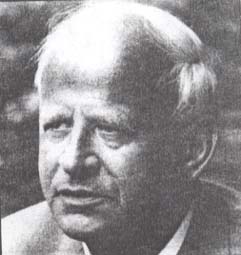
Helmut Thielicke: Preaching Amidst the Rubble

During the last days the Third Reich, as the Nazi terror struggled in its final throes and allied bombs rained down on Stuttgart, Helmut Thielicke preached a remarkable series of sermons based on the Lord’s Prayer. These were days of uncertainty and death. On more than one occasion the shriek of air raid sirens interrupted the sermon.

Thielicke writes that during this period there were times when he felt utterly stricken: “My work in Stuttgart seemed to have gone to pieces; and my listeners were scattered to the four winds; the churches lay in rubble and ashes.”

In one of the messages from this series, based upon the petition “Thy Kingdom come,” Thielicke describes an encounter with a woman from his congregation. It happened as he was standing in the street looking down into the pit of a cellar­–all that remained from a building that an allied bomb had shattered. The woman approached him and declared, “My husband died down there. His place was right under the hole. The clean-up squad was unable to find a trace of him; all that was left was his cap.”

What does a pastor say in a moment like this? “I’m sorry,” hardly seems adequate. But the woman had not come to Thielicke for sympathy. She wanted to express her gratitude. “We were there the last time you preached in the cathedral church” she continued. “And here before this pit I want to thank you for preparing him for eternity.”

This is as good a definition of preaching as I have heard. Better, perhaps, than many, because of its stark realism. Preaching is preparing others for eternity. Preaching is having the last word. To preach is to take your stand before the pit and bear witness to the rubble of this ash heap world that the Kingdom of God is at hand.


Worse Things Have Been Said


Not long after I graduated from seminary, I spoke to a friend about my discouragement with the church I was serving. Looking back I realize now that things were not as bad as they seemed. The opposition I faced was the sort that every young pastor deals with, especially when he is eager to prove himself. But at the time it seemed to me that I had made a terrible mistake.

Some of the church’s charter members were grumbling about changes I had initiated. A few even hinted that I had bullied the church’s leaders into seeing things my way. Their criticism was unfounded but it stung just the same. I began to wonder if I was wrong to accept a call to this congregation. My friend listened to my tale of woe but was unsympathetic. “Worse things have been said about better men” he told me. I was annoyed by his blunt reply but could not disagree with his point.

Jesus warned those who speak in his name that they will also share in his reproach: “A student is not above his teacher, nor a servant above his master. It is enough for the student to be like his teacher, and the servant like his master. If the head of the house has been called Beelzebub, how much more the members of his household!” (Matt. 10:24-25)

The problem here is ultimately one of authority. Christ’s words serve as fair warning to all who preach that divine authority does not guarantee a smooth path. We would like to think that God given authority also gives us leverage with our hearers. “Listen to us,” we want to say. “We speak for God.” But the same Bible that gives us our authority also offers ample proof of the congregation’s capacity for discounting that authority.

Preaching is an awkward business. The preacher does not give advice, the preacher declares. The preacher tells people what is right and what is wrong. When they turn to the right or the left, the preacher stands before them like the angel who stood in Balaam’s path, and says, “This is the way, walk in it.” What right do we have to make such demands? Who are we to tell others how to live?

Preaching is impolite. When we preach we draw public conclusions about the motives of our listeners and impugn their character. We utter things from the pulpit that we would not dare to say in private conversation, at least not to strangers! 

This is the preacher’s prophetic responsibility. “Prophetic preaching does not necessarily imply that the preacher assumes the role of Jeremiah or Amos, but that the preacher remains faithful to the prophetic dimensions of biblical texts” Thomas G. Long explains. “If the word comes from God in the biblical text, the preacher remains true to that word, regardless of the reaction or the cost.”

Unfortunately, the prophetic mantle cannot guarantee that every barb that aimed in our direction is undeserved. Some of the complaints leveled against us are warranted. The reproach we bear is not always the reproach of Christ. Sometimes it comes as a result of rash decisions we have made or right words spoken in the wrong spirit. My friend was right. Worse things have been said about better men. And just as often better things are said about us than we deserve.

Preaching and the Authority of the Text

Preaching derives its authority from the text of Scripture. Our work of correcting, rebuking and encouraging all flow from a more fundamental command: “Preach the Word” (2 Tim. 2:4). Without the authority of the biblical text there would be no authority for preaching.

There are some who prefer to point past the text and locate the preacher’s authority in the ideas of Scripture, generally in the gospel or more particularly in the person of Christ. In his book Homiletic, for example, David Buttrick writes: “Of course, when we claim that the Bible is our ‘authority,’ we are pointing past text, and past even the gospel in scripture, to God-for-us in Jesus Christ.” Buttrick admits that there are many who believe that God has conferred authority on the Scriptures themselves and are convinced that “the Bible has been designated ‘Word of God’ by divine fiat to rule the church.” But he clearly sees this as a problem.

Buttrick is right to say that the Scriptures point beyond themselves to Christ. Jesus asserted as much when he told the religious leaders: “You search the Scriptures because you think that in them you have eternal life; it is these that testify about Me; and you are unwilling to come to Me so that you may have life” (John 5:39-40). But Jesus also testified to the authority of the biblical text, down to the smallest letter and to the least stroke of the pen (Matt. 5:18). He said that Scripture cannot be broken (John 10:35). 

It is certainly possible to misunderstand the Scriptures. We can intentionally twist the Scriptures. But we cannot put Jesus at odds with the text of Scripture without putting Jesus at odds with himself. To attribute authority to Christ but to deny it to the Scriptures is a contradiction. The Scriptures bear witness to Christ and Christ bears witness to the Scriptures. They both speak of each other and they both speak with the same voice.