What I Learned from Dave and Paul

For some time now I have been puzzling over God’s tendency to expect more of me than I expect of myself. Every time I read the Scriptures I get the sense that my standard of expectation and his are not the same. He tells me to love God with all my heart, soul and strength and to love my neighbor as myself. He tells me to be patient and show mercy. I like the “me” I find in these commands. The person reflected in these divine expectations is compelling. It is the kind of person I would like to know–the sort of person I would want as my friend. But it is not me. Not as far as I can tell.

 If I were speaking of anyone other than God, I would be tempted to say that such expectations are marked by a certain naïveté. You know what I mean. This is the kind of insipid good nature found in the person who mixes unfounded optimism and denial in equal measure. It is the sort of person who “expects the worst” but “hopes for the best” in others. They are not truly optimistic. They are either blind or foolish. This cannot be the case where God is concerned. The Bible which calls me to such a high standard is also marked by a stark realism. God knows my frame. He knows that “nothing good lives in me, that is, in my sinful nature” (Rom. 7:18). He knows that I have repeatedly disappointed him on every count.

 This morning it dawned on me that this same mixture of honest assessment and gracious expectation is reflected in two of my good friends and colleagues. Dave DeWit and Paul Santhouse both work in the publishing division of the organization where I teach. Their personalities are very different but they both have the same capacity to look “through” my shortcomings and see me in a different light. They are patient and gracious in their friendship but they are also truthful. Although they know what I am really like, they have high expectations of me. Higher expectations than I have of myself. When I see myself through their eyes, I do not see the person that I think am but the kind of person I want to be. They make me want to be a Christian like them.

 This is the kind of remarkable vision that God’s word provides. It is one which compels me to “see through” myself. With its “unrealistic” call to obedience, God’s word offers me a vision of the person I was meant to be. With its unflinching truth, God’s word shows me what I am now. This is the love of Christ which “does not delight in evil but rejoices with the truth. It always protects, always trusts, always hopes, always perseveres” (1 Cor. 13:6-7). But it is a love which does more than show me the gap between what God expects and how far I have fallen short. It is a love which has closed the gap with the bridge of the cross. It is a love that empowers me by grace and promises to carry me across. This is not the kind of love that makes me want to be a Christian. It is the love that has made me one.

Challenges Pastors Face-#4: Ministry to those in Distress

Trouble is Heaven’s goad. God applies it to good purpose in the life of the believer and unbeliever alike. For the unbeliever suffering often serves as God’s rude awakening, a sharp slap intended to bring the sinner to his senses. It is a measure of the deceitfulness of sin that this aim cannot be achieved unless suffering is also accompanied by the grace of God. When suffering enters the believer’s life, it functions like the potter’s hand that shapes the clay. Distress is the discipline which proves that God is treating us as his children.

This means that those who seek the pastor are usually hurting. Alexandre Vinet notes: “the principle occasion of religion and the ministry is suffering.” The pastor is exposed to the difficulties of the church more than anyone else. Many who come to him are suffering from self inflicted wounds. Often they expect the pastor to repair in a few minutes what has taken years to tear down. The nature of the difficulties the pastor must deal with run the entire gamut from physical to emotional to moral problems. The pastor sees people at their worst and is aware of the church’s deepest flaws, exposure that  can lead to depression or disillusionment. There is no “magic bullet” that will eliminate distress from the lives of those to whom we minister. More often than not our place is not to offer a quick fix but to exercise the ministry of presence. It is enough to be with people in their distress and serve as a reminder of God’s presence with them. Even if we could make the trouble disappear, we might not be doing them a favor.

But the natural discomfort we feel over their discomfort makes us especially vulnerable to what Jeremy Begbie has called “the pathology of sentimentality.” The sentimentalist, Begbie points out, cannot engage in another’s pain as pain or face up to another’s negative features. Those who sentimentalize the distress of the congregation are compelled to “keep on the sunny side of life.” Begbie is writing about the effect of this pathology on worship and notes how music in the contemporary church has sometimes been “deployed as a narcotic, blurring the jagged memories of the day-to-day world, rather than as a means by which the Holy Spirit can engage those memories and begin to heal them.” In the same way, the pastor is tempted to speak when he ought to be silent, offering up platitudes in the face of distress. Such words, though well meant, can blunt the sharp edged lesson God intends to teach through distress. In such cases it would be better if we were silent.

Perhaps it is time that we crossed over from the sunny side and joined God in the shadows.

See Jeremy Begbie’s excellent essay entitled “Beauty, Sentimentality and the Arts” in The Beauty of God: Theology and the Arts, edited by Daniel J. Treier, Mark Husbands and Roger Lundin (InterVarsity): http://www.ivpress.com/cgi-ivpress/book.pl/code=2843


Every Pastor a Potential Hero

This morning I came across this passage in Alexandre Vinet’s Pastoral Theology:

 “We must not fear to bring before us the gloomy view of the ministry. Let us say to ourselves that in this career heroism is necessary. All pastors ought to be heroes, for Christianity even in the people is heroism; a Christian is in spirit a hero, a hero potentially.”

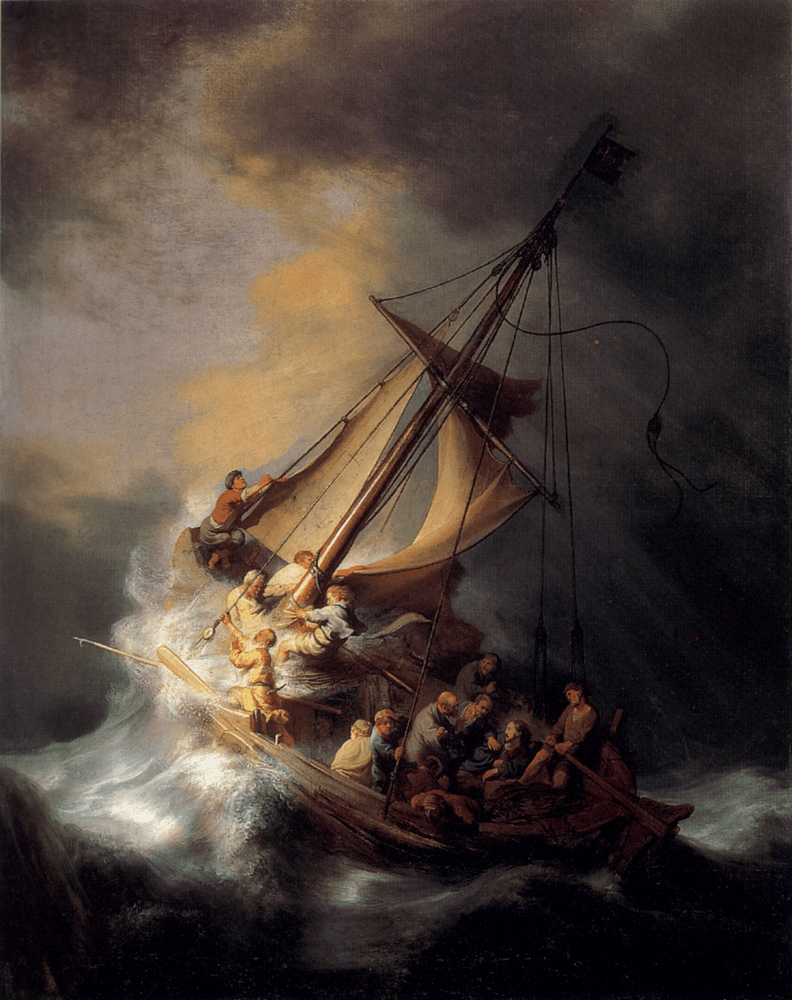
 According to Vinet, one of the hindrances to ministry is a failure to expect difficulty: “The history of the Church is composed of a succession of troubles and of peace; and these periods are unforeseen. The deepest perturbations are not always announced by sure, and especially by distant presages. The sky is serene in the evening; the next day a storm bursts forth, and the stormy weather cannot be anticipated.”

 It is understandable that we should be alarmed when storms arise in ministry but we should not be surprised, as if something unusual were happening to us. The church’s normal condition, Vinet points out, is neither of absolute affliction nor absolute peace. The ministry is “a tempest of the spirit” (Gregory Nazianzen).

With Wandering Steps and Slow

The world was all before them, where to choose

Their place of rest, and Providence their guide:

They hand in hand, with wandering steps and slow,

Through Eden took their solitary way.

 John Milton’s poem Paradise Lost concludes with Adam and Eve making their way out of Paradise. Still partners in the task assigned to them by God, they walk hand in hand but “with wandering steps and slow.” Does this signify reluctance?  Or is it evidence of their infirmity now that sin has left its mark upon them?

They remain God’s stewards but in a world that has just begun to feel the effects of its broken condition. They have experienced God’s grace but the nature of their fellowship with him has changed. God was a familiar companion before sin entered the world. Now he is an invisible presence. Sin has also separated these two lovers from one another. They are hand in hand but they are no longer united in the way they were before they ate from the forbidden tree. In this double sense, their path out of Eden is a “solitary way.”

 Milton’s closing words paint a picture of the human condition. They help me to understand the ambivalence I feel as a fellow pilgrim with Adam. God offers “hope and a future” to those who are scarred by sin (Jer. 29:11). But this experience of God’s presence and guidance is not unmixed. The path is often difficult and the way unclear. I am not always sensible of his presence and am sometimes slow to obey. The one great difference between my condition and Adam’s is that I know by experience what he knew only by promise. To use Milton’s language, “providence was his guide.” Christ is mine. The hope that he welcomed from afar is the hope that dwells within me through God’s Spirit and it is Christ that I follow “with wandering steps and slow.”

George Bailey Lassos the Moon

“Mary, I know what I’m going to do tomorrow and the next day and the next year and the year after that. I’m going to leave this little town far behind and I’m going to see the world. Italy, Greece, the Parthenon…the Coliseum. Then I’m coming back here and I’ll go to college and see what they know and then I’m going to build things. I’m going to build air fields. I’m going to build skyscrapers a hundred stories high. I’m going to build bridges a mile long.”

 So says George Bailey in the Frank Capra classic It’s a Wonderful Life. As it turns out, George is wrong. He doesn’t know what he’s going to do tomorrow and the next day and the next year and the year after that. As it turns out, what he is supposed to do tomorrow is pretty much what he did today. God’s plan for him is to do the ordinary thing. Which, of course, is the last thing that George wants to do. Because George Bailey wants to lasso the moon.

 I thought about George Bailey last night when I couldn’t sleep. I was thinking about God’s will. I haven’t thought about God’s will for some time. Not seriously. Not in that obsessive way that I used to back when I was a college student, wondering about God’s plan for my future. I don’t think much about God’s will because, like George Bailey, I know what I’m going to do tomorrow and the next day and the next year. At least I think I do. Get up and go to work (if I ever fall asleep). Come home and have dinner with my wife. Take a walk. Try to think of something to write about in my blog. Goals that are, for the most part, pretty low on the horizon.

 Here is the irony. I am doing everything I dreamed of doing back when I was in college. I am married to someone I love. Teaching, writing and preaching. But not in the way (and frankly not to the extent) that I imagined when I wondered what God’s plan for my life would look like. In those days I was aiming for the moon. God’s will, revealed through the constraints and necessities of ordinary life, have compelled me to lower my expectations. I wanted to expect great things from God and attempt great things for God. His agenda for me seems far more commonplace. This has not always been easy to accept.  

In his book Christ Plays in Ten Thousand Places, Eugene Peterson recounts the story of the fourth century church father Gregory of Nyssa whose brother Basil had arranged for him to be made bishop of Cappadocia. “Gregory objected,” Peterson writes, “he didn’t want to be stuck in such an out-of-the-way-place. His brother told him he didn’t want Gregory to obtain distinction from his church but to confer distinction upon it.”

 Is this not what Christ wants for us as well? To lower our sights and put away our lasso? To seek the good of the small places in which He has placed us and to confer distinction upon them by serving him with humility there? The path of glory is often an obscure one. It is the way of the cross. “He has showed you, O man, what is good. And what does the LORD require of you? To act justly and to love mercy and to walk humbly with your God.” Micah 6:8