What I Learned from Dave and Paul

For some time now I have been puzzling over God’s tendency to expect more of me than I expect of myself. Every time I read the Scriptures I get the sense that my standard of expectation and his are not the same. He tells me to love God with all my heart, soul and strength and to love my neighbor as myself. He tells me to be patient and show mercy. I like the “me” I find in these commands. The person reflected in these divine expectations is compelling. It is the kind of person I would like to know–the sort of person I would want as my friend. But it is not me. Not as far as I can tell.

 If I were speaking of anyone other than God, I would be tempted to say that such expectations are marked by a certain naïveté. You know what I mean. This is the kind of insipid good nature found in the person who mixes unfounded optimism and denial in equal measure. It is the sort of person who “expects the worst” but “hopes for the best” in others. They are not truly optimistic. They are either blind or foolish. This cannot be the case where God is concerned. The Bible which calls me to such a high standard is also marked by a stark realism. God knows my frame. He knows that “nothing good lives in me, that is, in my sinful nature” (Rom. 7:18). He knows that I have repeatedly disappointed him on every count.

 This morning it dawned on me that this same mixture of honest assessment and gracious expectation is reflected in two of my good friends and colleagues. Dave DeWit and Paul Santhouse both work in the publishing division of the organization where I teach. Their personalities are very different but they both have the same capacity to look “through” my shortcomings and see me in a different light. They are patient and gracious in their friendship but they are also truthful. Although they know what I am really like, they have high expectations of me. Higher expectations than I have of myself. When I see myself through their eyes, I do not see the person that I think am but the kind of person I want to be. They make me want to be a Christian like them.

 This is the kind of remarkable vision that God’s word provides. It is one which compels me to “see through” myself. With its “unrealistic” call to obedience, God’s word offers me a vision of the person I was meant to be. With its unflinching truth, God’s word shows me what I am now. This is the love of Christ which “does not delight in evil but rejoices with the truth. It always protects, always trusts, always hopes, always perseveres” (1 Cor. 13:6-7). But it is a love which does more than show me the gap between what God expects and how far I have fallen short. It is a love which has closed the gap with the bridge of the cross. It is a love that empowers me by grace and promises to carry me across. This is not the kind of love that makes me want to be a Christian. It is the love that has made me one.

Between Heaven and Hell

Hell is not the only doctrine that has fallen out of favor in our day. Heaven has fallen on hard times as well. We used to sing, “Heaven is a wonderful place, filled with glory and grace.” But these days Evangelicals are more likely to speak of the kingdom than of heaven. Justice is more important to them than the hope of heaven.

To many the notion that heaven might be an actual place seems about as awkward as the thought of a literal Hell. N. T. Wright seems typical of this thinking when he asks what the ultimate Christian hope is and what hope there is for change, rescue, transformation and new possibilities within the world in the present. “As long as we see Christian hope in terms of going to heaven,” Wright claims, “of a salvation that is essentially away from this world the two questions are bound to appear unrelated.” No, Christians today don’t want to go to heaven. We want our heaven on earth and we want it now.

It seems to me that these two things are linked. The church’s neglect of the doctrine of hell springs from the same root that has prompted us to marginalize the hope of heaven. It is a result of being worldly-minded. This is a major cause of all our disappointment with God. We are disappointed because we are primarily interested in the comforts of earthly life and troubled by earthly sorrows. We have forgotten Jesus’ warning that there are other worse sorrows yet to come as well as better joys that cannot be described in earthly terms.

The often quoted observation of C. S. Lewis was right. We are too easily satisfied: “We are half-hearted creatures, fooling about with drink and sex and ambition when infinite joy is offered to us, like an ignorant child who wants to go on making mud pies in a slum because he cannot imagine what is meant by the offer of a holiday at the sea.”

Our distaste for the old doctrine of hell reflects a similar lack of vision. We clamor for justice but what we really want is a kind of spiritual egalitarianism. We want a heavenly bureaucracy which makes sure that everyone is serviced. We do not really want justice. How could we? If a blameless and upright man like Job, someone who feared God and shunned evil, withered under the faintest breath of God’s justice, what makes us think that we could survive its full blast?

John’s latest book is coming in September. You can find out more about it at follygraceandpower.com.

Read John’s article on “the trajectory of worship” in the March issue of Christianity Today.

Since You Asked

I was on the radio yesterday morning. It was one of those call-in programs where people ask questions about the Bible. The regular person (the man who has all the answers) was gone. So they called me. I didn’t mind. But I’m afraid I wasn’t very good at it. My answers were too tentative. Too qualified. Too many long pauses while I tried to locate the chapter and verse. On radio the rule is talk first and think later. Or at least, think while you talk. I can do both. But I find that it usually works better if I think first.

Still, I stumbled through to the best of my ability. Do this sort of thing often enough and I suppose you eventually come up with a supply of stock answers. I have answered questions on the radio often enough to notice that they are almost always along the same line. The questions themselves are not exactly the same. But they usually fall into the same basic categories. They are the sort of questions that everyone asks:

“If God is a God of love, why is there suffering?”

“Will God really punish the wicked?”

“Are we free to choose God or does he choose us?”

“And just who does God think he is anyway?”

 About half-way through the program (somewhere between the question about the Nephilim and the one about the origin of evil) it dawned on me that most of my callers were not looking for answers so much as they were hoping for air-time. They were not asking questions. They were making a point. And they are not the only ones. We all ask questions like this. We say things like, “Is there a reason you left your unwashed dishes in the sink?” or “Do I have to do it myself?”

 These are questions but only in the technical sense of the word. They are not intended to solicit information. Not really. More often than not the answer is implied in the question. So why do we ask them? Sometimes we ask them to make the other person feel foolish. The point made by the question is self-contradictory. More often the question is intended to provoke a response. The Bible is full of these kinds of questions.

God, in particular, seems fond of them:

“Where are you?”

“Have you eaten from the tree that I commanded you not to eat from?”

“Who do people say I am?”

 If the Bible is any indication, we are just as prone to ask such questions of God:

“How long, O Lord, how long?”

“Will not the judge of all the earth do right?”

“Are you the One who was to come, or should we expect another?”

 Usually, our aim in asking God such questions is the same as my callers. We hope to make a point. We want God to see the inconsistency of his position. We aim to provoke him to action. And sometimes, we are even interested in his answer.

John’s latest book is coming in September. You can find out more about it at follygraceandpower.com.

Read John’s article on “the trajectory of worship” in the March issue of Christianity Today.

The Myth that Became Reality

As a child, my favorite book was a collection of Greek myths. I checked it out of the library again and again and read it from cover to cover. To this day, when I stumble across a copy of it in the bookstore, I can’t help thumbing through it. I was captivated by the colorful pictures but even more by its stories of gods who acted like men. They loved and fought, were jealous and plotted against one another. The humanness of these ancient gods appealed to me, perhaps because I recognized myself in them.

Years later, when I began to study the Scriptures, I read of a God who was very different from these ancient deities. “God is not a man, that he should lie,” the Scriptures said. The Christian God–the God of the Bible–is also the God whose son’s birth was the death knell for the gods of the ancient world. Scholars have long recognized that the growth of Christianity made the all too human antics of the ancient gods such an embarrassment, worship of them eventually became untenable.

Perhaps that’s why I find the Christmas story so surprising. Because in the Bible’s account of Christ’s nativity it almost seems as if one of the ancient myths has come to life. The theme of the God who takes human form and comes to earth is a common one in these ancient stories. The unrecognized visitation of the gods is one of the most familiar story lines in Greek and Roman mythology.

But those visitations differ significantly from the biblical account of Christ’s birth. In those ancient tales the human form of the gods is really just a mask. Like a celebrity who wishes to remain incognito, they disguise themselves in order to pursue their own, usually selfish, ends. They disguise themselves to seduce a human lover or get their petty revenge on someone.

When Christ comes, however, he does not merely use human form to disguise himself, he becomes a man. The incarnation of Christ is no mask, it is essential to his being. What is more, Jesus does not take a human form and then discard it at the resurrection. He retains his human nature. This is one of the proofs Christ uses to show his followers that he has truly risen from the dead. Luke 24:39 the risen Christ urges his disciples, “See My hands and My feet, that it is I Myself; touch Me and see, for a spirit does not have flesh and bones as you see that I have.”

Moreover, when Jesus arrives on the scene, he doesn’t come to pursue his own ends. “My food is to do the will of Him who sent Me and to accomplish His work” he declares to his disciples in John 4:34. And that work, it turns out, is to offer his body as a sacrifice for sin. Indeed, that is why the nativity story is so central to the Christian faith and is why it was inevitable that Christ’s infant cry in the manger in Bethlehem would be the death knell of the ancient gods. Because their worship was dependent upon the paltry things that men and women can offer: a bull, a goat, a cup of wine. Things that might satisfy God if he had human appetites.

The appearance of the babe in Bethlehem showed that true worship is dependent something else. It rests upon Christ’s offering of himself. That’s why the author of the book Hebrews ultimately attributes the words of the Psalmist to Christ when he says, “…it is impossible for the blood of bulls and goats to take away sins. Therefore, when He comes into the world, He says, ‘Sacrifice and offering you have not desired, but a body you have prepared for me.”

 That is also why we ultimately show our misunderstanding when we romanticize the gritty details of the nativity. Our image of the night of Christ’s birth is one that is largely sanitized. In our romanticized image of Christ’s birth there is no sobbing pain from a pregnant girl who isn’t even out of her teens yet. No infant cry and flail of limbs as the umbilical cord is cut. No sudden chill as the rush of blood and placenta are poured out on straw at the moment of birth. Our image of the event is neat and tidy. Theatrically lit and comfortably warm, like the nativity plays we will watch tonight. But that is our myth. Not the reality that Christ experienced.

Thanks be to God.

Echoes of Heaven

In his latest book entitled Wonder Reborn: Creating Sermons On Hymns, Music and Poetry, Thomas Troeger describes the effect the hymns he learned as a child had upon his imagination. While Troeger was raised in the northeast, his mother came from South Carolina. She often complained that churches in the north did not sing the hymns she knew. When they did, they did not sing them with the same warmth.

Troeger writes that this difference was typified for him by the contrast between the two hymns In the Garden and O God of Bethel by Whose Hand: “As a child I recognized immediately the difference in sound, and with a child’s sense of knowing, I sensed two different musical characterizations of God in the contrasting tunes and rhythms.” In the Garden always made Troeger picture his great-aunt’s flower garden. While the hymn O God of Bethel  By Whose Hand made him think of the New England pilgrims. The contrast between these two fascinated Troeger, who could not figure out how they fit with the pictures he imagined of the biblical stories.

In his book Troeger cites the research of religious sociologist Robert Wuthnow, which reveals the importance of childhood experience on our spiritual lives. According to Wuthnow: “Looking at the data the childhood experience that matters most is not attendance at services but the subliminal contact with the holy that comes through hymns and other religious music, pictures, Bibles, crosses, candles, and other sacred objects.” This observation is enough to make any good Protestant wince–especially one whose children progressed far enough in the AWANA program to earn the Timothy award. Wasn’t the Reformation precisely a reaction against this sort of thing?

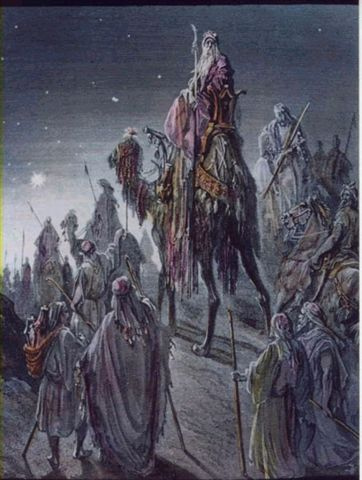
Yet as someone who grew up in a religionless home, I can testify to the truth of what Wuthnow says. My earliest memories of an experience of transcendence and my longing for God inevitably revolve around Christmas. The music of Christmas captivated me, along with the Christian images on the few Christmas cards we received and by the Christmas story itself. I stared at those pictures for hours, meditating on their meaning and wishing that I had been alive to see those ancient events unfold. I gazed into the night sky hoping to see some faint glimmer of the Christmas star. I played with the figures of our nativity set, something that was more of a cultural artifact than an object of devotion in our household, and imagined myself traveling with the magi as they traversed “field and fountain, moor and mountain.”

No wonder, of all the varieties of the church’s musical forms, it is the carols that I love the most.  I loved them all growing up. But I loved the old ones the best. Indeed, my favorite may be one of the most ancient. Its words, attributed to the Roman poet Aurelius Prudentius and dating back to the fifth century, still have the power to transport my imagination:

Of the Father’s love begotten,
Ere the worlds began to be,
He is Alpha and Omega,
He the source, the ending He,
Of the things that are, that have been,
And that future years shall see,
Evermore and evermore!

As a child those ancient carols sounded to me like something from another world, an echo heaven come down to earth. They still do…evermore and evermore.

Worship’s Dull Surprise

In a new book about creating sermons based on hymns, music and poetry, Thomas Troeger observes that today’s church suffers from an imagination deficit. Troeger notes that “the starved imagination of the church and the resultant drought in the soul have driven many people from the community of faith.” He cites Fred Craddock’s observation that many parishioners “are not so much evil as they are bored, and their entire Christian experience has never provided them a chair in which to sit for an hour in the heavenly places with Christ.”

Troeger’s assessment agrees with my experience. In my thirty-seven years of serious attendance at worship, I have come to the sad conclusion that church is the location least suited to the contemplation of the heavenly places. The predominant temper of my experience in church has been one of boredom. Worship is for the most part dull. There have been exceptions, of course, rare moments when some hymn or song transports me into the heavenly realms. Or when the word of God causes the scales to fall from my eyes and I see God’s truth or myself in a way I have never seen before. But those moments seem  few and far between.

It does not help that all the church has to offer worshipers these days is a boilerplate experience. Overly familiar songs and chatty sermons are served up with the monotonous homogeny of a fast-food franchise. The music of worship is Christian “top-forty.” The observations from scripture are trite and garnished with cute stories from the margins of Reader’s Digest. It is a corporate experience that at best promises to be mildly interesting but it hardly ever offers a taste of the transcendent.

Looking back on my experience, I suppose this boredom was one of the primary factors that propelled me into ministry. I am rarely bored when I am the one doing the preaching. Unfortunately, the same cannot be so said of my listeners. Time and again as I have been held fast by the grip of my own words, I have looked out over the congregation with an unsettling awareness that I do not have their undivided attention. They look bored. As bored as I must look when I am seated among them.

As long I am the one doing the preaching, I am tempted to blame the congregation for their boredom and for good reason. Listening, like reading, requires focused attention, and not everyone is willing to pay the price. But on those Sundays when I return to the other side of the pulpit as a listener and participant, the old ennui comves over me and I do not know who to blame. Indeed, blame is the farthest thing from my mind. On those Sundays when I am not the one doing the preaching, I take my place in the pew beside my fellow worshippers. I turn my gaze toward the front and wait. I am waiting for the music of worship to give me a glimpse of the heavenly realms. I am waiting for the word of God to arouse me from my slumber like a lover’s kiss. I am waiting for God to show up.

Thomas Troeger’s book is entitled Wonder Reborn: Creating Sermons on Hymns, Music and Poetry (Oxford). http://books.google.com/books?id=ZXHp2AL_qIAC&printsec=frontcover&dq=wonder+reborn+troeger&source=bl&ots=qCAa2TIL8C&sig=QKUfKEYo-D7xvm86J4yrYRlQdPM&hl=en&ei=5HXyTNHyAYKhnAf5kJijCg&sa=X&oi=book_result&ct=result&resnum=3&ved=0CBoQ6AEwAg#v=onepage&q&f=false

Working for God: Part II

When Scripture declares that those who “direct the affairs of the church well” are worthy of “double” honor (1 Timothy 5:17), it implies a standard of recompense which is correlated with performance. Paul’s reasoning seems to be something like this: All those who direct the affairs of the church are worthy of “honor.” The “good ones” deserve double honor. Those who labor in preaching and teaching especially deserve this reward (the Greek term could be translated “most of all”).

 Such language not only implies a comparison of effort between those engaged in the same ministry context, it implies that the nature of the work and the degree of effort should be taken into account when the church considers how to reward its servants in a monetary way. All who labor deserve a “wage” or reward. Some are more deserving than others. In view of this, an equitable return for one’s labor does not mean that everyone who labors should get the same amount but that the return should be equal to the effort. Those who work harder deserve more.

 The fact that those Paul has in view are engaged in what might be described as “kingdom work” is significant. How should the perspective of grace affect one’s approach to evaluation and reward in the workplace? Two of Jesus’ parables may shed light on this question. The parable of the workers in the vineyard and the parable of the talents both have employment and evaluation as a backdrop. In the parable of the workers in the vineyard God is portrayed as one who generously rewards those who labor (Matthew 20:1–16). Certainly the parable is intended as a warning against the kind of bargaining spirit which approaches the labor of the kingdom with a hireling’s mentality. It describes a shocking grace by which those who have invested less labor (because they came to the field later) receive the same reward as those who have had to endure the heat of the entire day. To suggest that employers ought to pay every employee the same wage goes beyond the scope of this parable. Yet it would not be too much to say that a grace informed ethic in the workplace would be an ethic that has generosity and kindness as its dominant features.

 The theme of expectation is further emphasized in Jesus’ parable of the talents (Matthew 25:14–30; Luke 19:12–27). Here Jesus tells the story of a man who entrusts his property to four stewards before setting out on a journey. Upon returning from his trip, the man calls his servants to “settle accounts” with them. In Luke’s version the man is described as a “king” and those who are entrusted with talents as “servants.” Such details provide another reminder that these parables were not meant to provide detailed guidance to employers in how to handle their employees. The parable of the talents, like the parable of the laborers, is a parable of the “kingdom.” Yet it is just here that the parable provides important insight for “Christian work.” Evaluation and reward are consistent with kingdom values. When Christ returns He will assess the performance of those who have served Him. This evaluation of what has been done will be based on a standard of expectation. The master tells the “wicked, lazy servant” what he should have done.

All legitimate labor deserves its own reward. The worker deserves his wages. But the one for whom we labor is also owed something. God expects us to do our work well. We are not merely laborers. We are artisans and craftsmen for the Kingdom.

Ten Challenges Pastors Face-Challenge #8: Prophet or Priest?

I first felt a calling to preach when I was in my teens. To my surprise my mother, who was not a church going woman, beamed with pride when I told her about my intention. “Oh, Johnny,” she gushed, “you’d make a darling minister.” I did not want to mouth poetry in a clergyman’s tame frock. Camel’s hair and thundering declamation were more my style. I aspired to the prophet’s mantle.

 The parallel between the preacher and the prophet is obvious. But prophet is not the only metaphor that should shape our pulpit ministry. There is also a priestly dimension. Priests, like prophets, exercised a ministry of God’s word (Lev. 10:11).  The priest, however, differed from the prophet because he shouldered an additional burden, serving as the people’s advocate. Priests were not only “selected from among men” but were “appointed to represent them” (Heb. 5:1).

 Like the priest, the preacher does not stand apart from those who hear but is called from among them in order to sympathize with them.  Whenever we take our place before God’s people to declare his word, we also take upon ourselves this responsibility advocacy. We may stand above or before the congregation in order to be seen or for the sake of acoustics, but our true location is in their midst. We speak to the people but we are also for them.

 The key to priestly advocacy is identification. This means that the priest/preacher functions as a kind of mediator, standing between the text and the congregation and listening to the word of God on their behalf. The prophetic nature of preaching gives us authority to make demands of the listener. But it is the priestly nature of preaching obligates us to make demands of the text. It compels us to take our cue from the patriarchs, the psalms and the apostles, as well as from the prophets, and ask God to justify himself: Will not the judge of the earth do right? How long, O Lord? Why have you afflicted us?

Our priestly responsiblity compels us to give voice to the silent questions that plague our listeners. Our prophetic obligation means that we will refuse to smooth out the sharp edges of the text. These two dimensions work in harmony.

Challenges Pastors Face-#4: Ministry to those in Distress

Trouble is Heaven’s goad. God applies it to good purpose in the life of the believer and unbeliever alike. For the unbeliever suffering often serves as God’s rude awakening, a sharp slap intended to bring the sinner to his senses. It is a measure of the deceitfulness of sin that this aim cannot be achieved unless suffering is also accompanied by the grace of God. When suffering enters the believer’s life, it functions like the potter’s hand that shapes the clay. Distress is the discipline which proves that God is treating us as his children.

This means that those who seek the pastor are usually hurting. Alexandre Vinet notes: “the principle occasion of religion and the ministry is suffering.” The pastor is exposed to the difficulties of the church more than anyone else. Many who come to him are suffering from self inflicted wounds. Often they expect the pastor to repair in a few minutes what has taken years to tear down. The nature of the difficulties the pastor must deal with run the entire gamut from physical to emotional to moral problems. The pastor sees people at their worst and is aware of the church’s deepest flaws, exposure that  can lead to depression or disillusionment. There is no “magic bullet” that will eliminate distress from the lives of those to whom we minister. More often than not our place is not to offer a quick fix but to exercise the ministry of presence. It is enough to be with people in their distress and serve as a reminder of God’s presence with them. Even if we could make the trouble disappear, we might not be doing them a favor.

But the natural discomfort we feel over their discomfort makes us especially vulnerable to what Jeremy Begbie has called “the pathology of sentimentality.” The sentimentalist, Begbie points out, cannot engage in another’s pain as pain or face up to another’s negative features. Those who sentimentalize the distress of the congregation are compelled to “keep on the sunny side of life.” Begbie is writing about the effect of this pathology on worship and notes how music in the contemporary church has sometimes been “deployed as a narcotic, blurring the jagged memories of the day-to-day world, rather than as a means by which the Holy Spirit can engage those memories and begin to heal them.” In the same way, the pastor is tempted to speak when he ought to be silent, offering up platitudes in the face of distress. Such words, though well meant, can blunt the sharp edged lesson God intends to teach through distress. In such cases it would be better if we were silent.

Perhaps it is time that we crossed over from the sunny side and joined God in the shadows.

See Jeremy Begbie’s excellent essay entitled “Beauty, Sentimentality and the Arts” in The Beauty of God: Theology and the Arts, edited by Daniel J. Treier, Mark Husbands and Roger Lundin (InterVarsity): http://www.ivpress.com/cgi-ivpress/book.pl/code=2843


Four Reasons We Are Disapponted With Jesus

We know God is perfect. We know that he can do no wrong. So why is it that we are sometimes so disappointed with Jesus? Four of the most common reasons include:

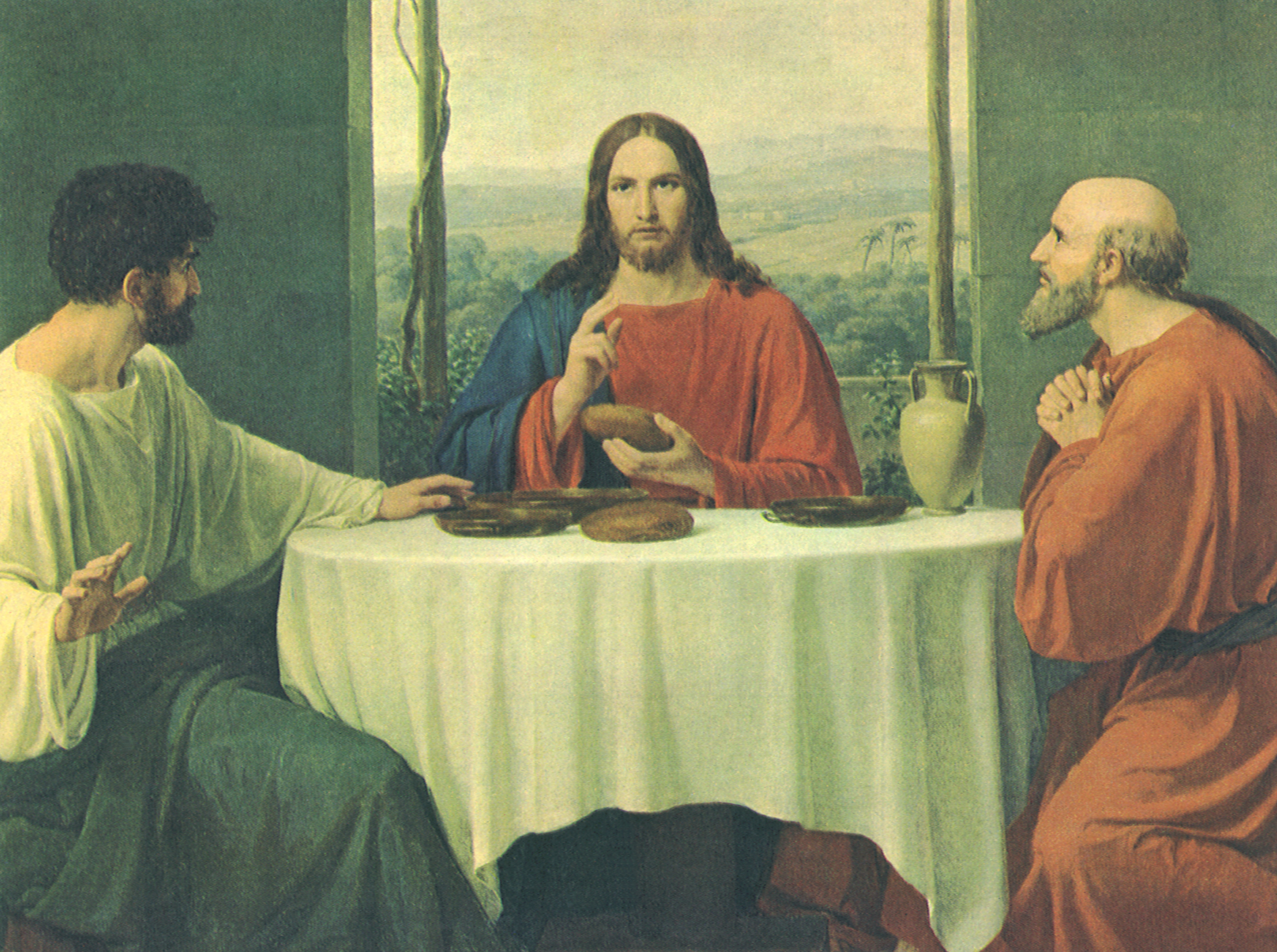
1. Unfulfilled Expectations: This is the fundamental cause of all disappointment with God. He does not act as we expect him to. He does not do what we want. This is so common as to be universal. Ocassionally we are disappointed because our expectations were unrealistic. But often they are not. The single who wanted to be married, the childless couple that wanted to be parents, the parents who hoped their child would walk a different path all have reasonable expectations. What makes this especially difficult is that the ordinary nature of these expectations means that every day we are confronted with examples of others for whom these same expectations were fulfilled. This kind of disappointment is often related to God’s plan for us. (cf. Luke 24:21 the two on the road to Emmaus who said, “We had hoped…”).

2.  Misinterpretation of my Circumstances: We may be disappointed with God because we look at our circumstances and draw wrong conclusions either about God’s motive or his intent. Things go badly for us and we see this as a sign that God hates us or that he ignores us. Or our circumstances are difficult and we think that all of this is working for our destruction. Jacob thought this way when his sons tried to take Benjamin back to Egypt in Gen. 42:36. “All these things are against me” he said. In fact, the opposite was true. God was orchestrating these things to preserve his life and keep his promises.

4. We blame God for what others have done: Often we blame God for things that others have done. Sometimes it’s Christians who have hurt us. We attribute to God the bad behavior or evil motives of those who represent him. Or we may suffer at the hands of those who are evil. God’s plan for our lives may mean that we suffer at the hands of others. We are right in concluding that God is ultimately in control but wrong about the motive. Job is a good example of this (cf. Job 2:3).

4. Drawing the wrong conclusions about answers to prayer. We may think that we or someone else is God’s “court favorite.” When our requests are not granted or if there is delay, we become embittered. In a wonderful essay entitled “The Efficacy of Prayer,” C. S. Lewis points out the folly of such thinking. “Prayer is not a machine. It is not magic. It is not advice offered to God” Lewis writes. “It would be even worse to think of those who get what they pray for as a sort of court favorites, people who have influence with the throne. The refused prayer of Christ in Gethsemane is answer enough to that.”

Lewis points to the “hard saying” he once heard from and older Christian. The Christian said: “I have seen many striking answers to prayer and more than one that I thought miraculous. But they usually come at the beginning: before conversion or soon after it. AS the Christian life proceeds, they tend to be rarer. The refusals, too, are not only more frequent; they become more unmistakable, more emphatic.”

“Does god then forsake just those who serve Him best?” Lewis asks. “Well, He who served Him best of all said, near His tortured death, ‘Why hast thou forsaken me?’ When God becomes man, that Man, of all others, is least comforted by God at his greatest need.” Lewis rightly concludes that there is a mystery here and urges those whose prayers are sometimes granted not to draw hasty conclusions. “If we were strong, we might be less tenderly treated” he warns. “If we were braver, we might be sent, with far less help, to defend far  more desperate posts in the great battle.”